
Retina y diabetes ocular · Lentes y graduación
Diabetes and a change in eyeglasses: Why it’s a good idea to check blood sugar stability first
Read this guide
High Vision
Schedule an appointment
Choose how to contact the office.
Retina y diabetes ocular · Lentes y graduación
Choose how to contact the office.
In brief: When blood glucose is unstable, the eye’s lens changes shape and temporarily alters your prescription. Changing your glasses during this period often results in an incorrect prescription. Before updating your prescription, it’s a good idea to confirm with your doctor that your blood glucose is under control.
Noticing that your vision suddenly becomes blurry, or that your glasses no longer work as well as before, can be very concerning when you have diabetes. The good news is that understanding the cause behind changes in your eyeglass prescription due to diabetes can help you make better decisions and avoid unnecessary expenses on incorrect prescriptions.
High blood glucose causes the eye's lens to absorb fluid, change shape, and temporarily alter your visual focus. This effect is reversible when blood glucose stabilizes, and in most cases it does not indicate permanent damage.
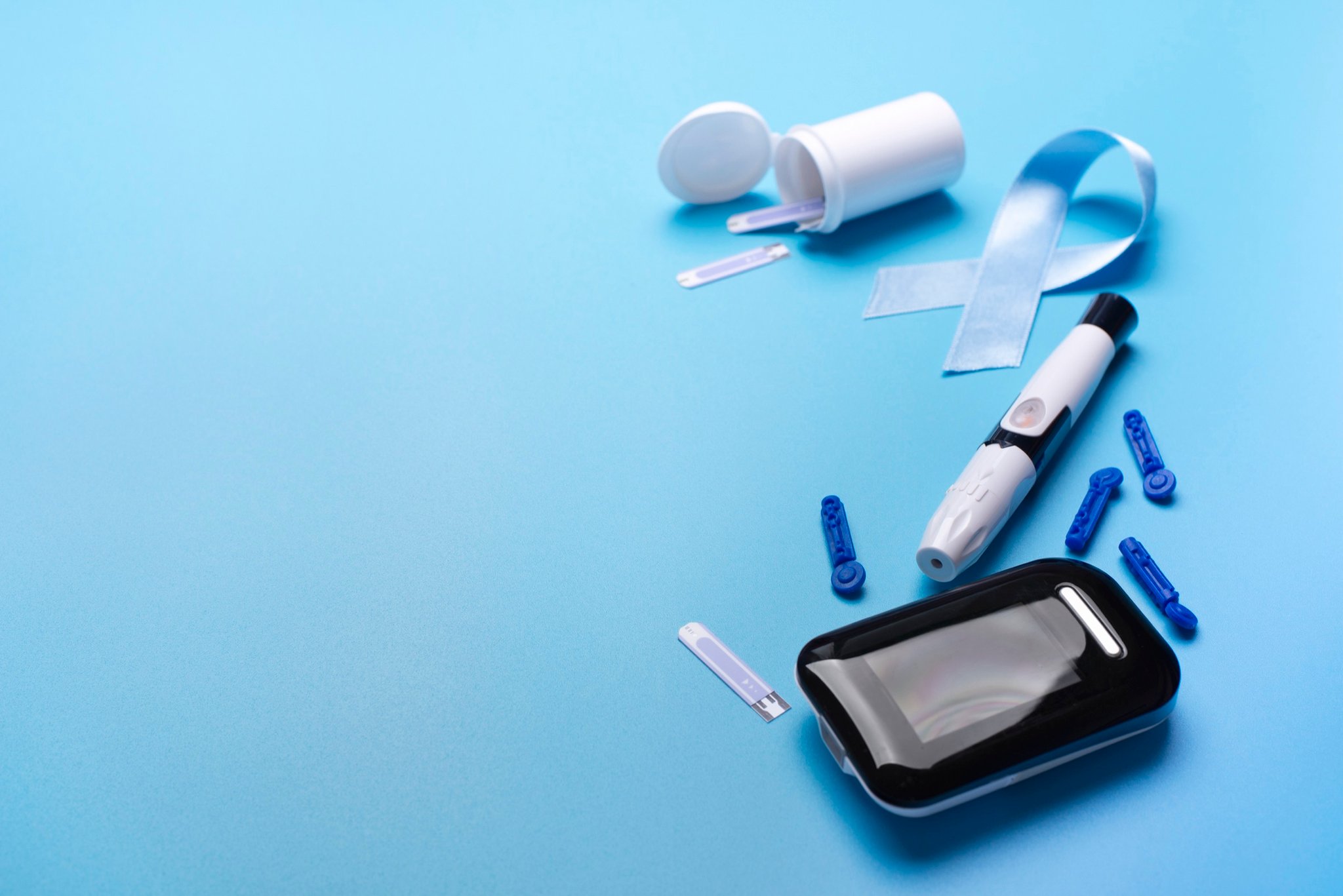
When blood glucose levels rise above the normal range, the lens swells as it absorbs excess fluid due to osmotic pressure. This changes its shape and refractive power, altering how light focuses on the retina. (Eye Symptoms That Hint at Blood Sugar Issues)
In some cases, when blood glucose is high, near vision may improve while distance vision worsens; conversely, when it drops, near vision may worsen and distance vision may improve. (Glucose monitoring system as control input to adjustable focal length lenses) This explains why your prescription may seem to change from one day to the next.
In most cases, the best approach is to wait until blood glucose levels stabilize before making any permanent changes to your glasses prescription. (How Diabetes Affects Your Vision: Signs & Expectations)
Some patients get new glasses during periods of unstable blood glucose, only to find that the prescription is incorrect once their glucose stabilizes. (Eye Symptoms That Hint at Blood Sugar Issues)
The key to telling them apart is the pattern: if your vision changes throughout the day or depending on what you’ve eaten, it’s more likely related to blood glucose fluctuations. If the blurriness is constant, progressive, or affects only one eye, an eye exam is needed.
Vision that shifts from clear to blurry and back again is a classic sign that your blood glucose may be going up and down. You may notice that mornings feel different from afternoons, or that some days you can read small print easily and other days you can’t. (Eye Symptoms That May Signal a Blood Sugar Problem)
The following table summarizes the most important differences between the two causes:
Feature: Pattern
Blurred vision due to unstable blood sugar: Fluctuates throughout the day or week
Blurred vision due to retinal damage (retinopathy): Progressive or constant
Feature: Relationship to blood glucose
Blurred vision due to unstable blood sugar: Improves when blood glucose stabilizes
Blurred vision due to retinal damage (retinopathy): Does not improve with blood sugar control
Feature: Additional symptoms
Blurred vision due to unstable blood sugar: Fluctuating vision, without spots or flashes
Blurred vision due to retinal damage (retinopathy): Spots, floaters, shadows, flashes
Feature: Affected eye
Blurred vision due to unstable blood sugar: Usually both eyes
Blurred vision due to retinal damage (retinopathy): May affect only one eye
Feature: Early detection
Blurred vision due to unstable blood sugar: By the patient
Blurred vision due to retinal damage (retinopathy): Often no symptoms at first
Eye damage from uncontrolled blood sugar often has no symptoms at first. That’s why it’s essential to have an ophthalmologist examine your eyes regularly to detect problems before you notice them. (Surprising Facts About Diabetes and Your Eyes - American Academy of Ophthalmology)
See an ophthalmologist right away if you experience sudden vision loss, dark spots, flashes of light, a shadow covering part of your visual field, or sudden double vision. These symptoms may indicate a complication that requires prompt evaluation.
Mild fluctuations in vision in relation to meals or time of day generally allow for a scheduled appointment. However, any sudden change, change in just one eye, or change accompanied by the symptoms above should not wait.
Brief, sudden vision loss in one eye is vascular in nature and should be treated as an emergency. Diabetes is a risk factor, although short-term blood sugar fluctuations are not usually the direct cause. (Eye Symptoms That Hint at Blood Sugar Issues)
If, in addition to visual symptoms, you experience severe eye pain or the eye appears noticeably red, seek emergency ophthalmic care.
The ophthalmologist uses a combination of tests to distinguish temporary refractive changes from structural damage to the retina. A dilated eye exam is the key test and allows the doctor to see the fundus in detail.
The most commonly used tests include:
In the early stages, retinal damage often causes no symptoms. The care team can detect these changes during a dilated eye exam even when your vision still feels normal. (Eye Symptoms That May Signal a Blood Sugar Problem)
Management depends on the identified cause. If the changes are due to unstable blood glucose, metabolic control is the priority. If retinopathy or other complications are present, the ophthalmologist will describe the available options based on the stage.
Most diabetes-related changes that do not threaten vision resolve within weeks or months after medical management. In cases involving significant refractive changes, a temporary eyeglass prescription may be needed until refraction stabilizes. (Methods of treating eye diseases in diabetic patients)
For more advanced diabetic retinopathy, options the specialist may consider include intravitreal injections of antiangiogenic medications, laser photocoagulation, and, in selected cases, vitrectomy surgery. None of these options is chosen without a complete individual assessment.
People with diabetes are more likely to develop cataracts. Cataracts develop at younger ages and progress more quickly in adults with diabetes than in people without the condition. (Surprising Facts About Diabetes and Your Eyes - American Academy of Ophthalmology) The ophthalmologist will also evaluate the lens at each exam.
At High Vision, the retina department works in coordination with the cornea, cataract, and dry eye services to provide a comprehensive assessment when multiple factors are involved in a patient’s eye condition.
Consistent blood glucose control is the most important habit for protecting your eyes when you have diabetes. Studies show that keeping your glycated hemoglobin (HbA1c) within the target agreed on with your doctor significantly reduces the risk of eye complications.
Some practical, verifiable habits:
The prevalence of diabetes in Mexico reached 18.4% in 2023, according to the National Health and Nutrition Survey, representing an increase of 27.8% since 2006. (Prevalence of Diabetes Among First-Time Ophthalmology Patients at a Nonprofit Hospital in Mexico) Given this reality, early detection of eye damage is one of the most impactful preventive interventions.
The American Academy of Ophthalmology (AAO) states in its guide on diabetes and the eyes: "Get your blood sugar stabilized before your eye exams to get the correct eyeglass prescription" (Stabilize your blood glucose before your eye exam to get the correct prescription). This simple principle can save you time, money, and diagnostic confusion.
A screening study in primary care units in Mexico reported a diabetic retinopathy prevalence of 33.6% among patients with type 2 diabetes, of whom 9.4% had sight-threatening retinopathy. (Diabetic retinopathy prevalence in Mexico: Results from a primary public health access initiative for screening in patients with type 2 diabetes - ScienceDirect) This confirms that regular screening is not optional.
If you have diabetes and notice changes in your vision, schedule an ophthalmology consultation. A comprehensive exam—not just a prescription check—is the starting point for understanding what is happening in your eye and making informed decisions with your physician.
Yes, but it is best to do so after your blood glucose has been stable for a while. If your blood glucose is not controlled at the time of the exam, the measured prescription may not reflect your actual vision, and the new glasses could be incorrect once your blood glucose returns to normal.
The time varies from person to person. In general, temporary refractive changes caused by blood glucose fluctuations may resolve within weeks. Your ophthalmologist can advise you on the right time to check your prescription based on your particular situation.
No. Blurriness may be temporary and caused by changes in the shape of the lens due to unstable blood glucose. Retinopathy is a different condition that affects the blood vessels in the retina and requires an evaluation with dilated pupils for an accurate diagnosis.
The general recommendation for people with diabetes is an annual exam with pupil dilation, even if they have no vision symptoms. If diabetic retinopathy has already been diagnosed, the ophthalmologist may recommend more frequent exams depending on the stage.
Refractive changes caused by unstable blood glucose usually affect both eyes, though not always symmetrically. If you notice significantly different blurriness in one eye compared with the other, it is important to tell the specialist to rule out other causes.
In its early stages, diabetic retinopathy often causes no noticeable symptoms. That is why a dilated eye exam is the only reliable way to detect it early, before it significantly affects vision.
American Academy of Ophthalmology. (n.d.). 5 surprising facts about diabetes and your eyes. Accessed in October 2026. https://www.aao.org/eye-health/glasses-contacts/5-facts-about-diabetes-your-eyes
Medina-Ramirez, S. A., Soriano-Moreno, D. R., Tuco, K. G., et al. (2024). Prevalence and incidence of diabetic retinopathy in patients with diabetes of Latin America and the Caribbean: A systematic review and meta-analysis. PLOS ONE. https://doi.org/10.1371/journal.pone.0296998
Estrada-Mena, F. J., et al. (2023). Diabetic retinopathy prevalence in Mexico: Results from a primary public health access initiative for screening in patients with type 2 diabetes. Ophthalmology Science. https://doi.org/10.1016/j.xops.2023.100290
National Institute of Public Health. (2023). National Health and Nutrition Survey (ENSANUT) 2023. Government of Mexico. Accessed in October 2026.
National Eye Institute (NEI). (2023). Diabetic eye disease. National Institutes of Health. Accessed in October 2026. https://www.nei.nih.gov/learn-about-eye-health/eye-conditions-and-diseases/diabetic-retinopathy
American Academy of Ophthalmology. (n.d.). Diabetic retinopathy — Latin America. Accessed in October 2026. https://www.aao.org/education/topic-detail/diabetic-retinopathy-latin-america