
Children’s Eye Health
Children's costumes and vision: masks, accessories, and walking safety
Read this guide
High Vision
Schedule an appointment
Choose how to contact the office.
Children’s Eye Health
Choose how to contact the office.
In brief: Costume masks can reduce a child’s field of vision and increase the risk of falls and accidents while walking at night. Pointed accessories pose a real risk of eye injury, and nonprescription costume contact lenses can cause infections and serious damage to the cornea. Checking the costume before heading out—and choosing face paint instead of a mask—is the simplest and most effective measure.
Choosing the perfect costume is one of the things children look forward to most. However, in all the excitement, it’s easy to overlook something concrete: children’s costume vision is a topic ophthalmologists take seriously, because masks and costume accessories can limit what a child sees—exactly when they need it most: while walking at night.
This article explains, in a practical and reassuring way, what vision risks exist, how to identify warning signs, and what simple adjustments can make the experience safer.
Costume masks can significantly reduce a child’s field of vision: the eye openings are often small, misaligned, or asymmetrical, limiting both peripheral and central vision. This makes it harder to spot obstacles, vehicles, and steps, especially in low-light conditions.
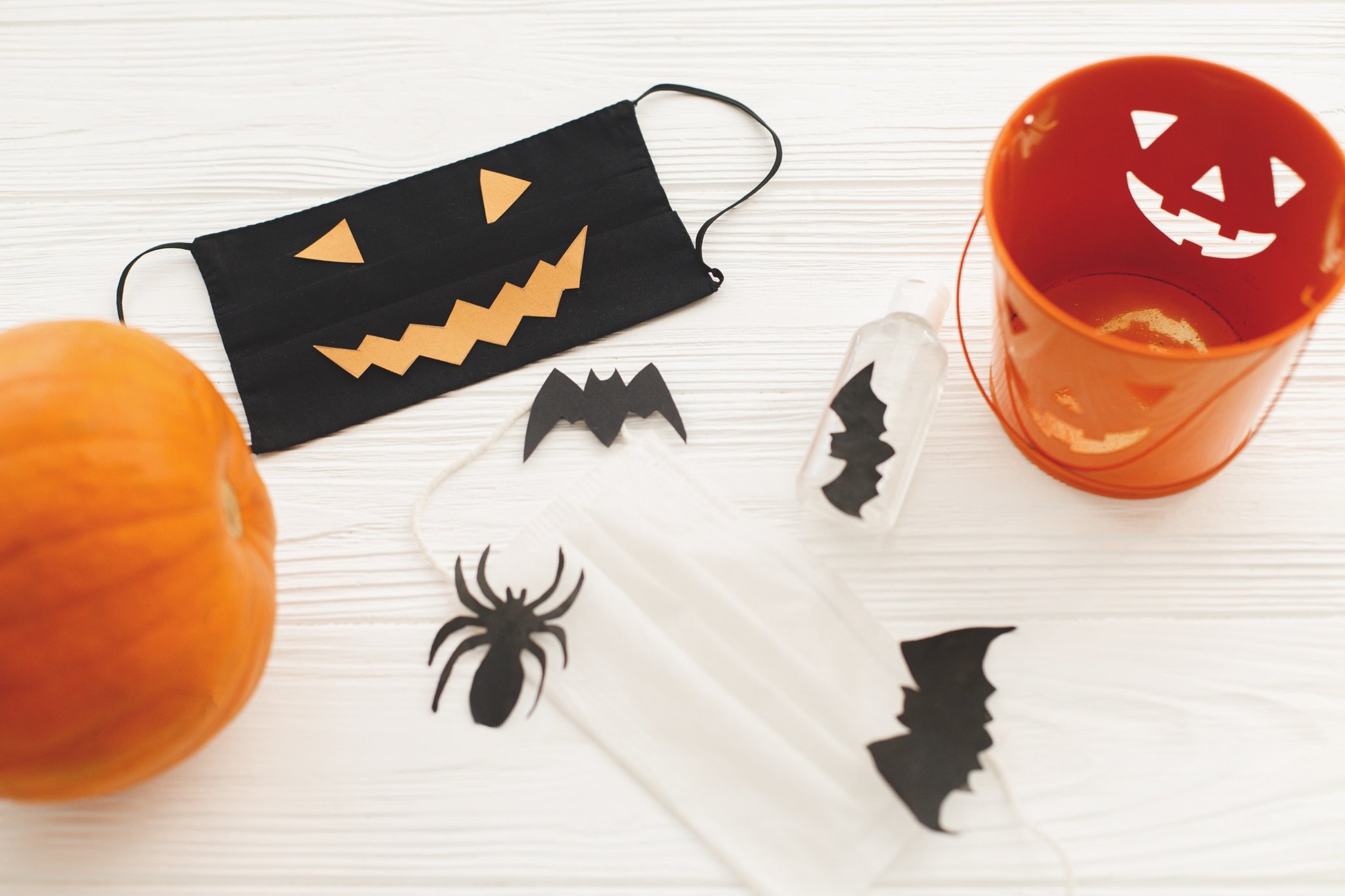
Plastic costume masks remain a popular choice among children, but one of their main drawbacks is that they often reduce the wearer’s field of vision, increasing the likelihood of tripping, falls, or collisions. (Could Your Child’s Halloween Costume Lead to Eye Problems? - Hattiesburg Eye Clinic)
Traditional masks tend to shift on the face, misaligning the eye openings with the child’s actual eyes. This creates safety problems, and many children have been injured on Halloween nights precisely because they could not see well while moving through dark, unfamiliar surroundings. (Facial mask and method)
Specialist Matthew F. Gardiner, MD, from the ophthalmology department at Mass Eye and Ear, sums it up clearly: “What we worry about most is children being hit by cars. They simply can’t see well when their faces are covered by large masks that obstruct their vision.” (Halloween Drives Surge in Ophthalmic Emergencies & Infections)
Rigid, pointed accessories—swords, wands, tridents, and spears—pose the greatest risk of direct eye injury on costume-filled nights. In crowded, dimly lit settings, a sudden movement can result in one child hitting another in the face.
Pointed accessories such as pirate swords, witch wands, and lightsabers can cause accidental eye injuries in dark, crowded settings. Masks, wigs, hats, and costumes can also obstruct central or peripheral vision, while eye patches limit depth perception and increase the risk of falls. (Eye Safety Tricks for Halloween)
Accessories with rigid, pointed ends can cause significant harm if they accidentally hit the eyes. Plastic swords, wands, and toy projectiles can cause serious injuries if swung forcefully or fired from close range. (Could Your Child’s Halloween Costume Lead to Eye Problems? - Hattiesburg Eye Clinic)
Health authorities recommend that all costume swords, wands, knives, and staffs be made of flexible materials, and that sharp or piercing accessories never be used. (How to dress your children for Halloween safely: district authorities’ guidelines for parents - Infobae)
The following table summarizes the main eye risks associated with costume accessories:
Accessory: Swords, wands, rigid spears
Eye risk: Direct impact, corneal abrasion, hyphema
Recommendation: Replace with flexible or foam versions
Accessory: Plastic mask with small eye openings
Eye risk: Reduced field of vision, increased risk of falls
Recommendation: Choose makeup or masks with large eye openings
Accessory: Pirate eye patch
Eye risk: Loss of binocular vision and depth perception
Recommendation: Use only indoors and under adult supervision
Accessory: Facial glitter
Eye risk: Particles that can adhere to the surface of the eye
Recommendation: Avoid using near the eyes; use hypoallergenic products
Accessory: Wigs and oversized hats
Eye risk: Obstruction of the upper peripheral vision
Recommendation: Adjust them securely so they don't fall over the eyes
Yes. Decorative contact lenses without a prescription are among the best-documented risks in pediatric ophthalmology during costume season. They are not harmless accessories: they are medical devices that require an individual fitting.
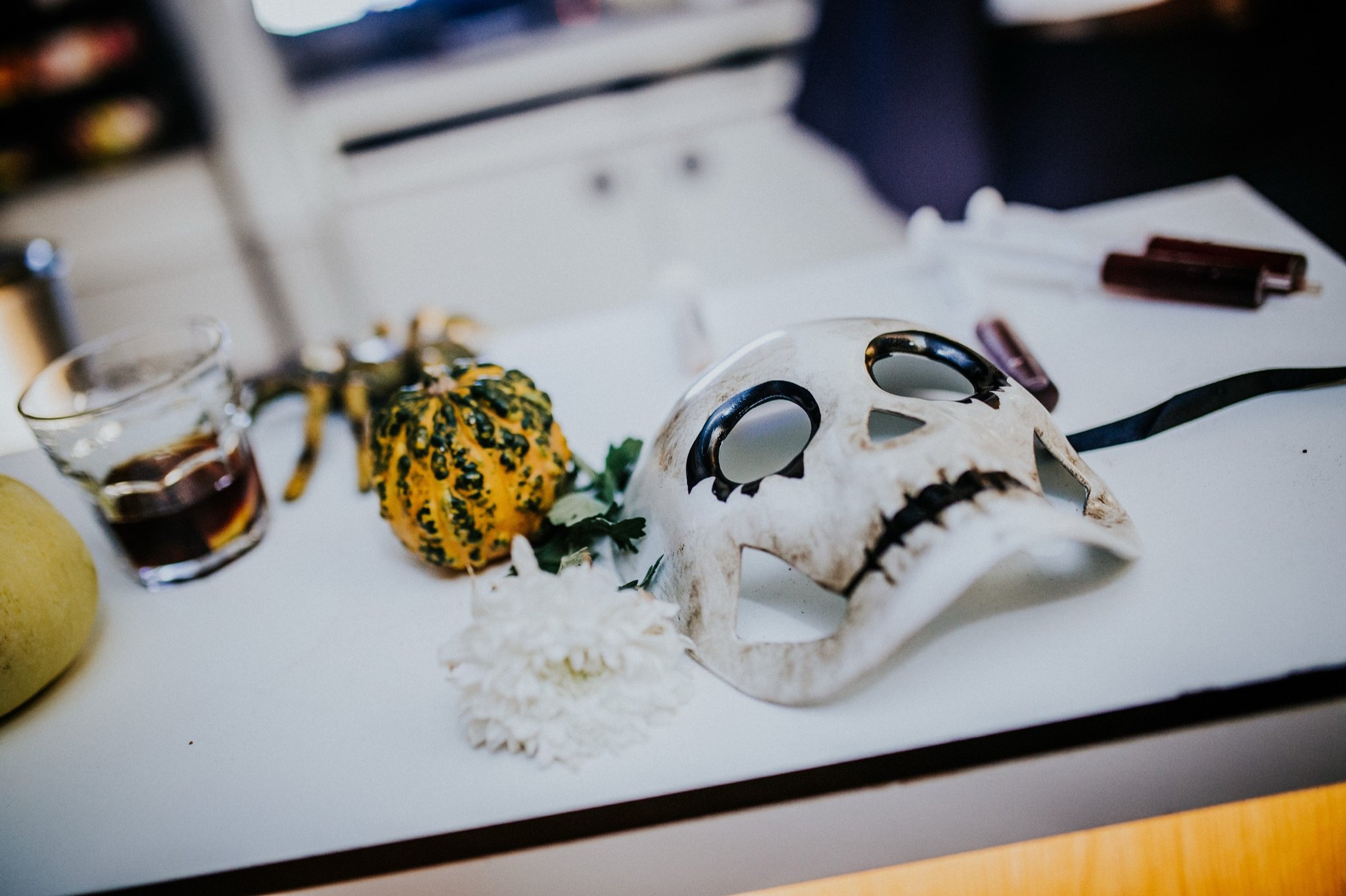
"Consumers should know that wearing lenses without a prescription can cause permanent eye damage," warns Dr. Thomas Steinemann, an ophthalmologist and member of the American Academy of Ophthalmology. "I have seen too many serious cases, in both children and adults, caused by decorative lenses." (Halloween and Cosplay Eye Safety - American Academy of Ophthalmology)
About 60% of people who used cosmetic contact lenses without a prescription reported eye problems such as pain, itching, redness, and swelling. The complication rate rose to 88% among those who lent their lenses to someone else. (Halloween and Cosplay Eye Safety - American Academy of Ophthalmology)
The American Academy of Ophthalmology notes that colored contact lenses can reduce the amount of oxygen reaching the eye because the pigments add thickness. This may lead to the need for eye surgery or, in extreme cases, vision loss. (Halloween warning: Costume contact lenses can destroy your child’s vision)
Health authorities emphasize that contact lenses should not be used as decorative accessories without a prescription because of the risk of serious eye injuries. (How to dress your children for Halloween safely: district authorities’ guidelines for parents - Infobae)
Most minor scrapes from a costume do not require urgent care. However, certain signs indicate that the eye may have sustained an injury requiring an ophthalmologic assessment, either urgently or at a scheduled appointment.
Seek immediate care if, after being hit or coming into contact with a costume accessory, your child has:
Contact lens-related eye infections can develop within hours, and sometimes the damage is irreversible. (Halloween and Cosplay Eye Safety - American Academy of Ophthalmology) If any of the above signs occur, do not wait until the next day: seek urgent ophthalmologic care.
If your child has only mild redness or tearing without pain, and symptoms improve within 15-20 minutes, you can schedule an appointment to rule out a minor corneal abrasion or an allergic reaction to makeup.
Walking at night in a costume that impairs vision increases the risk of traffic accidents and falls. A few practical steps can significantly reduce that risk, regardless of the costume you choose.
According to Prevent Blindness, a national organization dedicated to preventing blindness in the United States, several hundred costume- and mask-related eye injuries are treated in emergency rooms each year. (Halloween Drives Surge in Ophthalmic Emergencies & Infections)
These are the most effective ways to walk safely:
An eye-safe costume follows one simple rule: it does not interfere with what the child can see. Checking this takes less than two minutes and can help prevent an accident.
Safety authorities recommend that masks have eye openings large enough to allow full visibility. In general, masks or eye masks should not restrict vision or breathing. (Safety Alert: Halloween Masks and Costumes)
No mask accessory—hats, scarves, beards, wigs, or other decorations—should obstruct vision. (Safety Alert: Halloween Masks and Costumes)
Face paint or body paint is a safer alternative to masks, as long as the products are nontoxic and hypoallergenic. (6 Essential Halloween Costume Safety Guidelines for Children)
A contact lens is a medical device, even when used only for cosmetic purposes. Lenses that have not been properly prescribed, fitted, and cared for can damage the eye and increase the risk of infection. (Make sure keiki Halloween costume carousing doesn’t become nightmare for their eyes) If a child’s costume requires colored contact lenses, the only safe option is a prescription from an ophthalmologist or certified optometrist.
The following list summarizes the minimum vision safety criteria to consider when choosing a costume:
If you have questions about your child’s vision before or after costume season, schedule an assessment with a specialist. A preventive exam can detect problems with visual acuity or visual field that sometimes go unnoticed in everyday life.
Can costume masks cause permanent eye damage in a child?
Masks alone do not directly damage the eye, but by reducing the field of vision, they increase the risk of falls and blows to the face that can cause eye injuries. The greatest risk of permanent damage comes from novelty contact lenses without a prescription and pointed accessories that strike the eyeball directly.
Is it safe to wear a pirate eye patch as part of a costume?
A pirate eye patch temporarily eliminates binocular vision, reducing depth perception and making it harder to judge distances. It is safe indoors and under adult supervision, but is not recommended for walking on the street at night or crossing roads.
What should I do if my child gets glitter in their eye?
Rinse the eye with plenty of clean water or saline solution for at least 5 minutes without rubbing. If the foreign-body sensation, redness, or pain lasts more than 20-30 minutes, seek an ophthalmologic assessment that same day.
Can I buy colored contact lenses for a costume at costume stores or online?
It is not recommended. Contact lenses are regulated medical devices; selling them without a prescription is illegal in several countries and poses a real risk of infection and corneal damage. If the costume requires them, consult an ophthalmologist or optometrist first.
At what age can children wear colored contact lenses for a costume?
There is no universal minimum age; the decision depends on the child’s maturity to handle the lens hygienically and the specialist’s judgment. In any case, lenses must always be prescribed and fitted by a professional, and should never be purchased without a prior evaluation.
Is face paint safer than a mask for a child’s eyes?
In general, yes. Makeup does not restrict the field of vision or misalign vision. The condition is that it be a certified, hypoallergenic, and nontoxic product, and that it not be applied directly along the eyelid margin or inside the eye.
American Academy of Ophthalmology. (2023). Halloween and cosplay eye safety. Retrieved on 14 October 2026, from https://www.aao.org/eye-health/halloween-cosplay-colorful-contacts-eye-safety
Physicians Weekly. (2025). Halloween drives surge in ophthalmic emergencies and infections. Retrieved on 14 October 2026, from https://www.physiciansweekly.com/post/halloween-drives-surge-in-ophthalmic-emergencies-infections
2020 Magazine / Prevent Blindness. (2025). Eye safety tricks for Halloween. Retrieved on 14 October 2026, from https://www.2020mag.com/article/eye-safety-tricks-for-halloween-p2p-101325
Valley Children's Healthcare. (2025). 6 Essential Halloween Costume Safety Guidelines for Children. Retrieved on 14 October 2026, from https://es.valleychildrens.org/blog/6-essential-halloween-costume-safety-guidelines-children
Bogotá Mayor's Office / District Health Secretariat. (2025). Tips for choosing safe Halloween costumes for children 2025. Retrieved on 14 October 2026, from https://bogota.gov.co/mi-ciudad/salud/recomendaciones-para-el-uso-de-disfraces-en-halloween-2025
National Eye Institute (NEI) / NIH. Sports and eye safety: recommendations for parents and teachers. Retrieved on 14 October 2026, from https://www.nei.nih.gov/espanol/informacion-sobre-la-salud-ocular/vision-saludable